

Discover natural beauty and cosmetics made with pure, skin-friendly ingredients and without harsh chemicals. Our handcrafted natural soap cleanses gently while keeping your skin soft and moisturised, and our herbal shampoo nourishes the scalp, reduces hair fall and leaves hair smooth and shiny. Refresh your skin daily with a natural face wash that removes dirt and excess oil without stripping its natural glow. Our nourishing lip balm hydrates and protects dry, chapped lips, and our natural lipstick gives rich colour with a comfortable, long-lasting finish. Every product is made with plant-based, cruelty-free and paraben-free ingredients, so you can care for your skin, hair and lips the clean and sustainable way. Shop our range of organic skincare, haircare and lip care products for healthy, radiant beauty every day.
Choosing the right natural cosmetic starts with understanding your skin. Healthy adult skin has a slightly acidic pH of about 4.5 to 5.5, so the best natural face wash and herbal shampoo should fall in the same range to protect the skin’s natural barrier. Babies and elderly people have more sensitive skin, so they need gentle, fragrance-free, soap-free formulas with a pH of about 5.5 to 7. While handmade natural soap is naturally alkaline and suits most healthy adults, sensitive or dry skin does better with a mild cleanser. Always check the ingredient list, avoid harsh sulfates, artificial dyes and high-alcohol formulas, and do a patch test before regular use. For lip balm and lipstick, choose products tested for heavy metals and made with safe, plant-based ingredients. Look for trusted certifications like COSMOS, ECOCERT or cruelty-free labels, and check the batch number and manufacturing date for the best natural skincare, haircare and lip care.
in Every product we maintain a
- Skin-Friendly pH – Maintain a suitable pH for baby skin and the specific product type.
- Gentle Ingredients – Use mild, appropriate ingredients with low irritation potential.
- Effective Moisturization – Help maintain soft, hydrated skin and support the skin barrier.
- Microbial Safety – Ensure microbiological quality and effective preservation where required.
- Quality & Safety Testing – Conduct stability, packaging compatibility and appropriate safety tests before launch.
- Natural ingredients-Natural plant extracts nourish and soothe your skin, helping maintain softness, hydration, and a healthy natural glow.
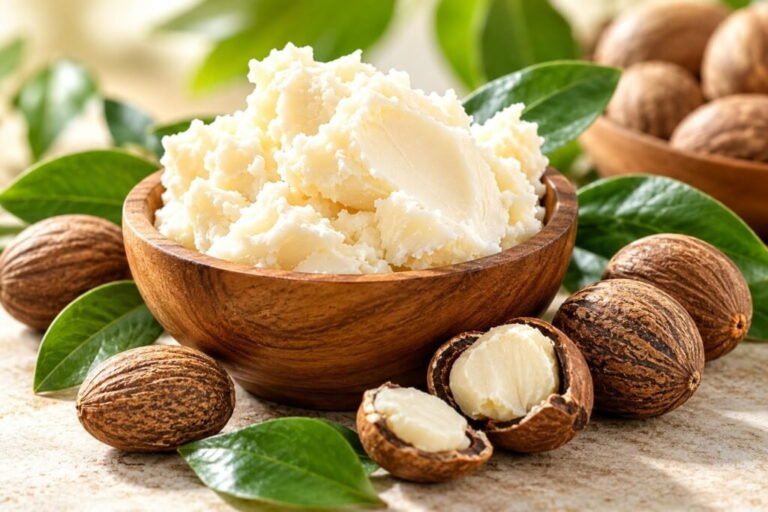
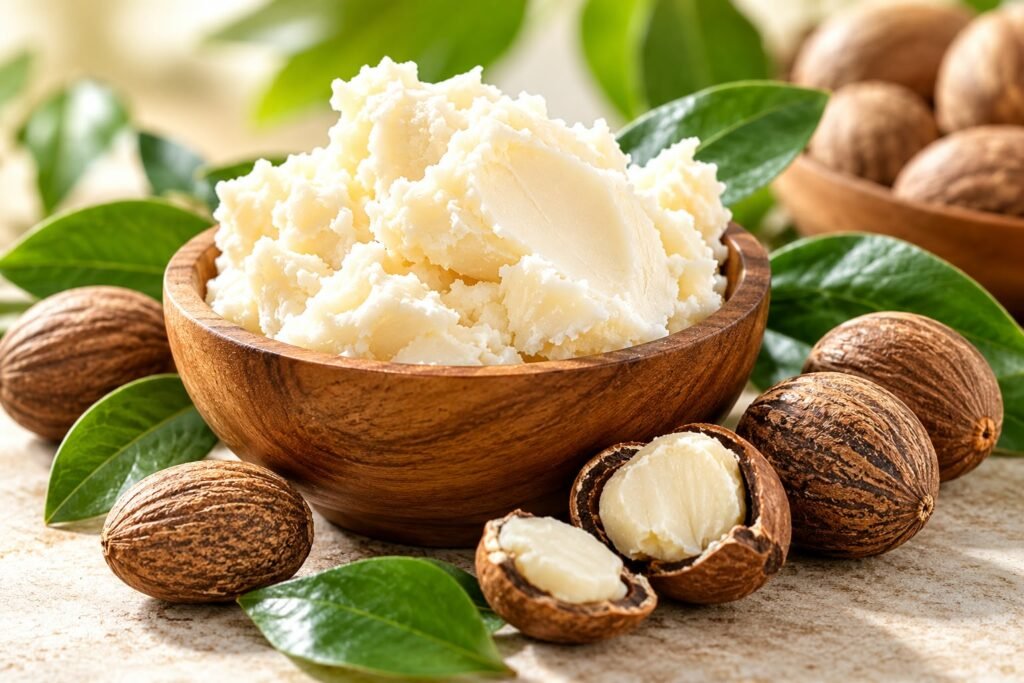
Shea Butter
- Deep Moisturization – Helps keep skin soft, smooth and hydrated.
- Skin Barrier Support – Helps reduce moisture loss and protect the skin’s natural barrier.
- Soothes Dry Skin – Helps comfort rough, dry and flaky skin.
- Rich in Fatty Acids – Contains nourishing fatty acids that condition the skin.
- Improves Skin Softness – Leaves skin feeling supple, smooth and nourished.
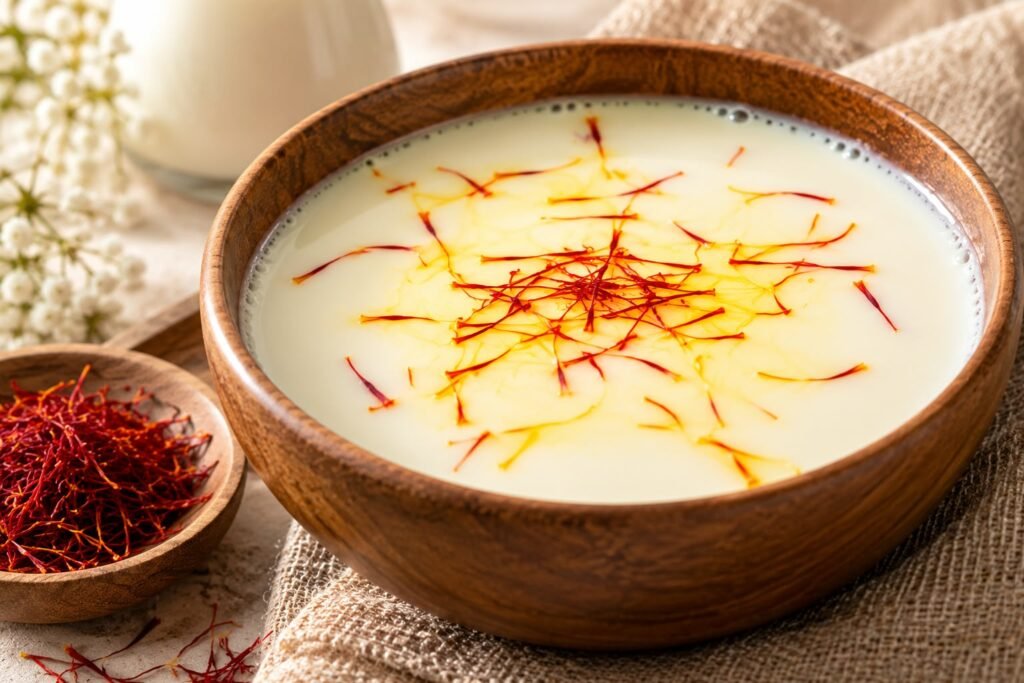
Goat Milk and Saffron
Milk Proteins – Help condition the skin and improve its soft, smooth feel.Milk Lipids – Help nourish the skin and support a supple feel.
Lactic Acid (Milk-Derived) – Can gently exfoliate in suitable formulations when present at an effective, skin-tolerated concentration.
Crocin in Saffron – An antioxidant compound studied for its potential skin-protective properties.
Safranal in Saffron – A naturally occurring compound with antioxidant activity studied in skincare research.
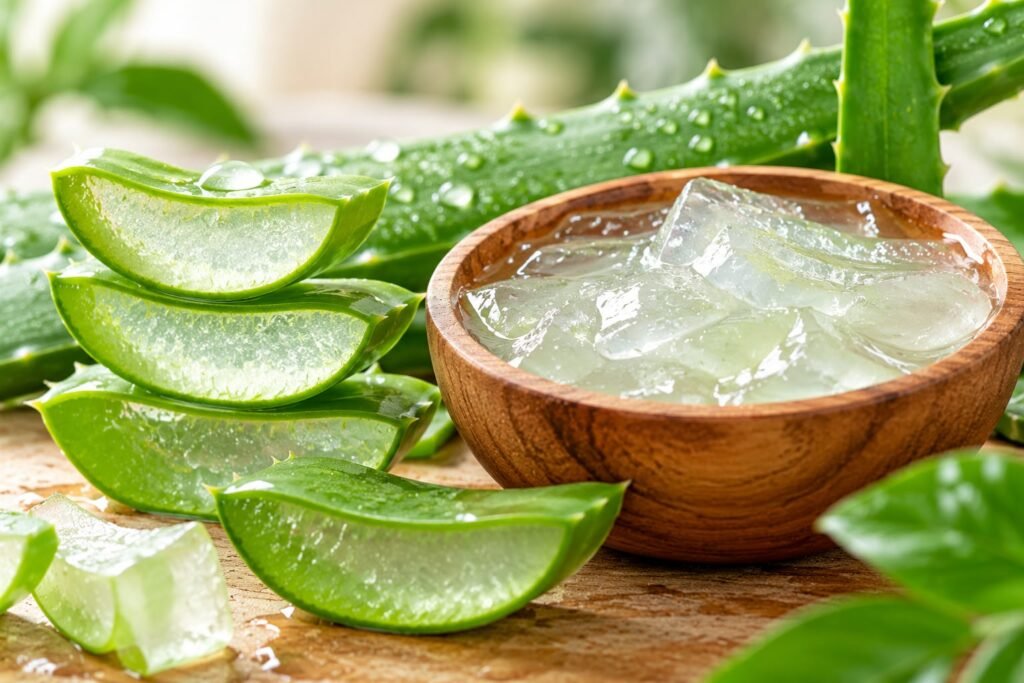
Aloe Vera
Acemannan – A polysaccharide that helps retain moisture and condition the skin.
Polysaccharides – Help hydrate the skin and support a soft, smooth feel.
Vitamins C & E – Antioxidants that help protect against oxidative stress when present in the extract.
Amino Acids – Help condition the skin and maintain its softness.
Salicylic Acid (Naturally Occurring) – Present in small amounts in aloe; associated with exfoliating properties, but meaningful exfoliation should not be assumed
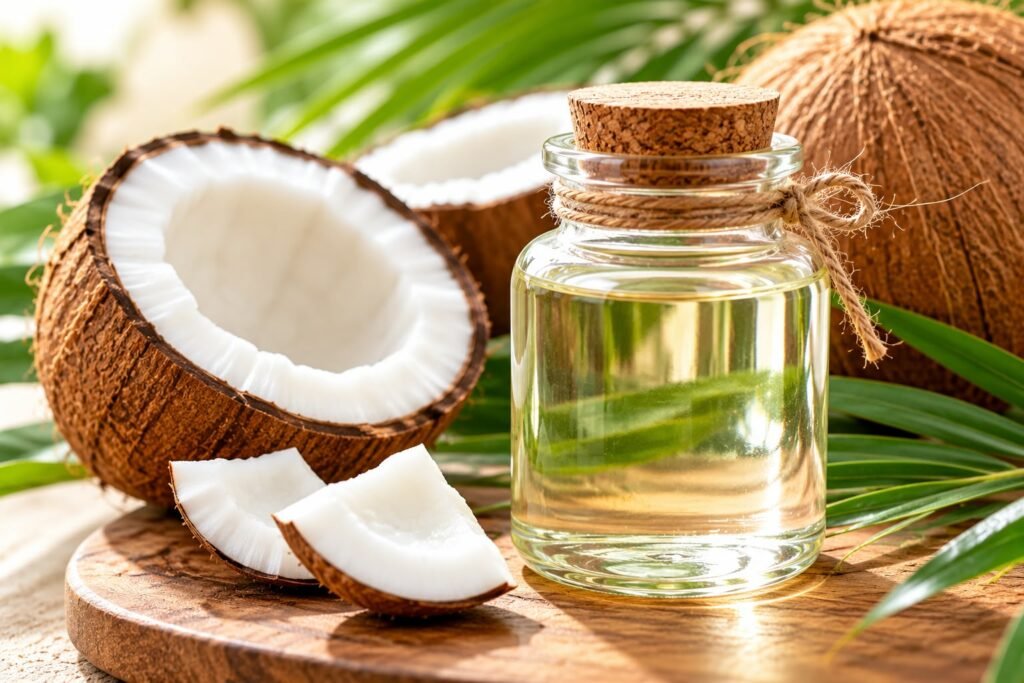
Virgin Coconut Oil
Lauric Acid Rich – Naturally rich in lauric acid.
Antimicrobial Properties – May help inhibit certain microorganisms.
Deep Skin Conditioning – Helps soften and condition dry skin.
Moisture Barrier – Helps reduce water loss from the skin.
Natural Emollient – Leaves skin feeling smooth and supple.
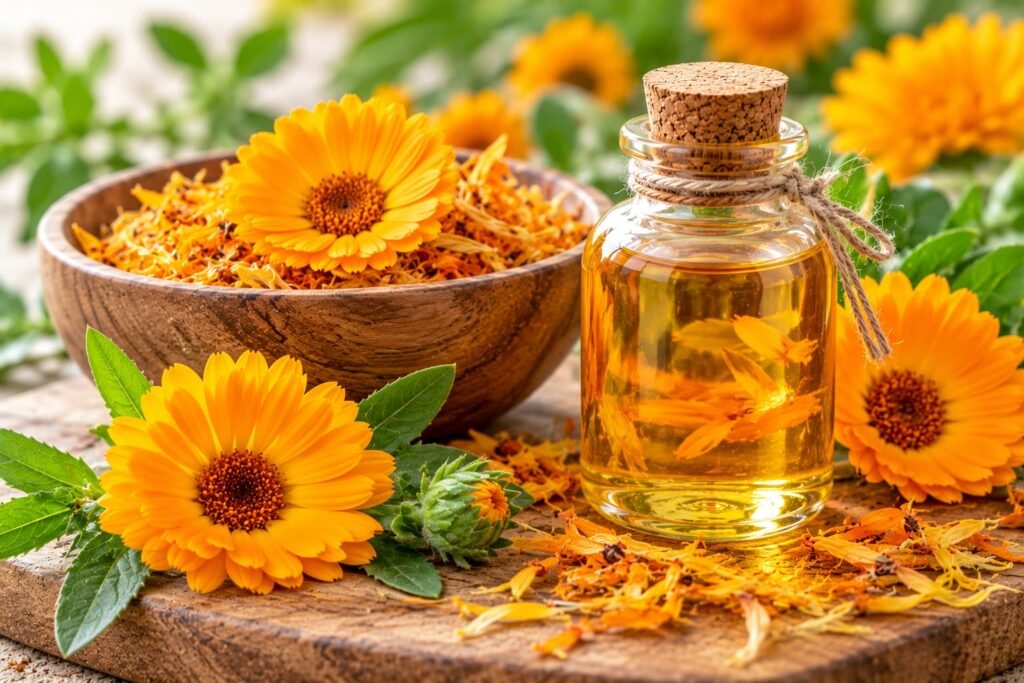
Calendula Extract
Triterpenoids – Plant compounds associated with soothing skin care.
Flavonoids – Antioxidant compounds that help protect skin from oxidative stress.
Carotenoids – Natural pigments with antioxidant properties.
Skin-Soothing Action – Helps calm skin discomfort and irritation.
Skin Recovery Support – May support the skin’s natural recovery process.
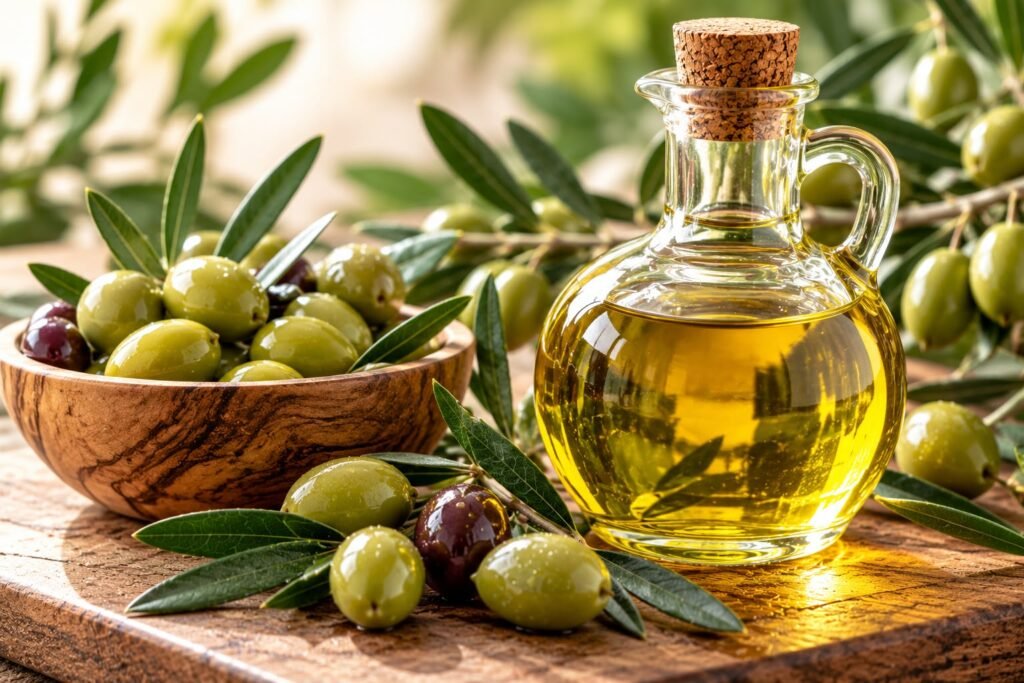
Olive Oil
Oleic Acid Rich – Helps soften skin and maintain moisture.
Squalene Content – A naturally occurring compound that supports skin conditioning.
Vitamin E – Provides antioxidant protection against oxidative stress.
Polyphenols – Plant compounds with antioxidant properties.
Emollient Action – Helps smooth rough skin and reduce moisture loss.
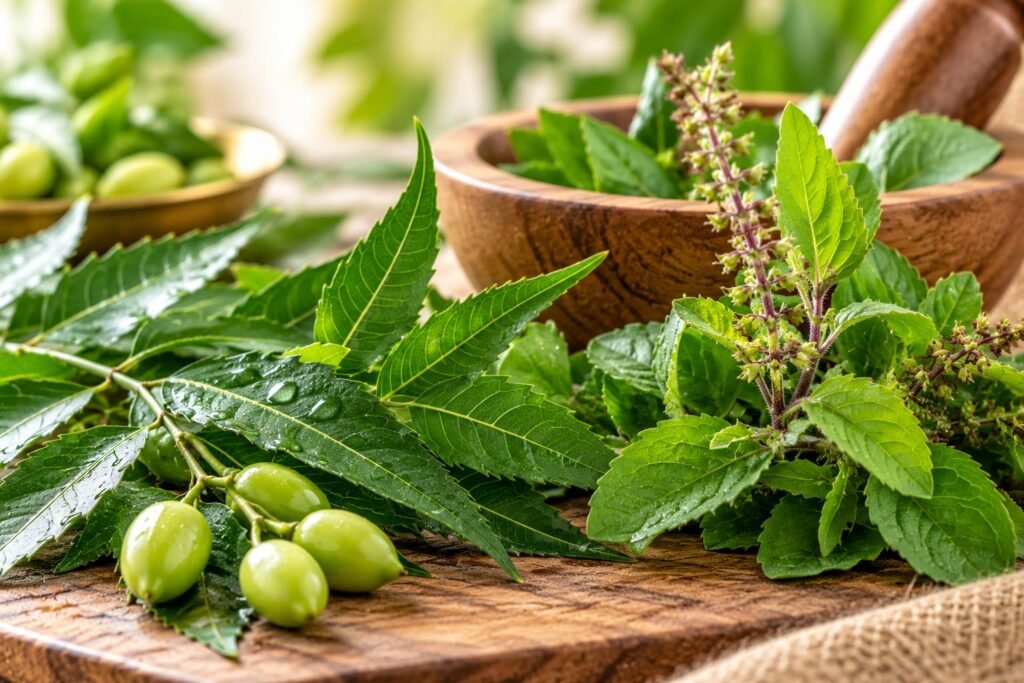
Neem & Tulasi
Antimicrobial Properties – Neem contains compounds studied for their activity against certain microbes.
Antioxidant Rich – Both plants contain natural antioxidant compounds.
Oil-Balance Support – Neem-based skincare may help care for oily skin.
Skin-Soothing Care – Tulasi contains plant compounds with potential soothing benefits.
Blemish-Prone Skin Care – Their properties make them useful ingredients in skincare formulated for blemish-prone skin.
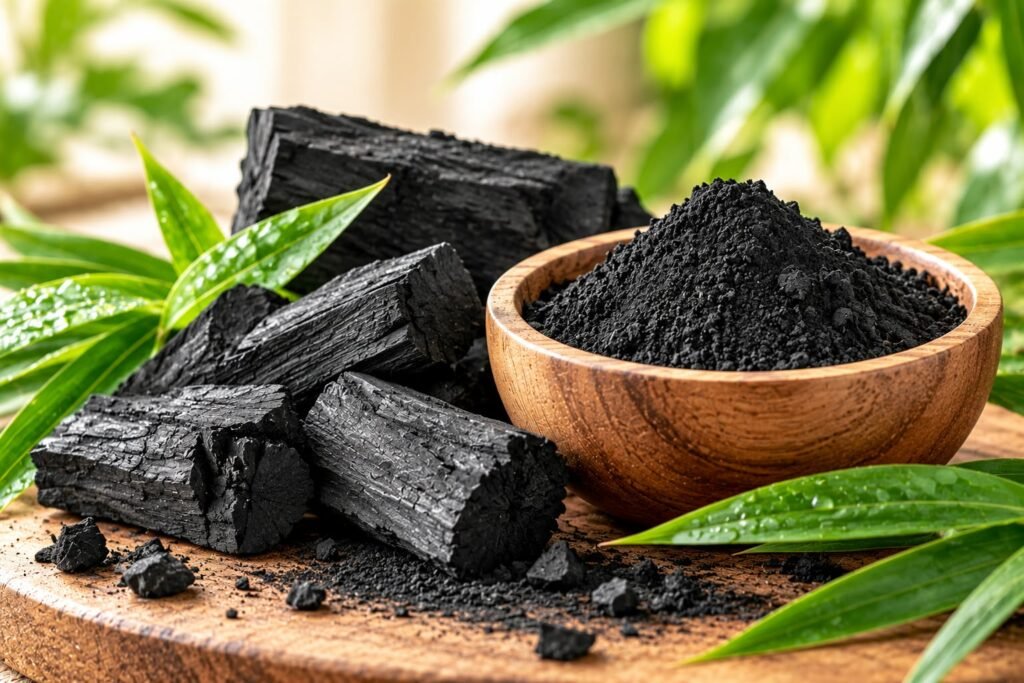
Activated Charcoal
Oil Absorption – Helps absorb excess oil from the skin.
Impurity Removal – Helps lift away dirt and surface impurities.
Deep Cleansing – Helps cleanse pores by adsorbing certain substances.
Grease Control – Helps reduce the greasy feel of oily skin.
Fresh Skin Feel – Leaves skin feeling clean and refreshed.
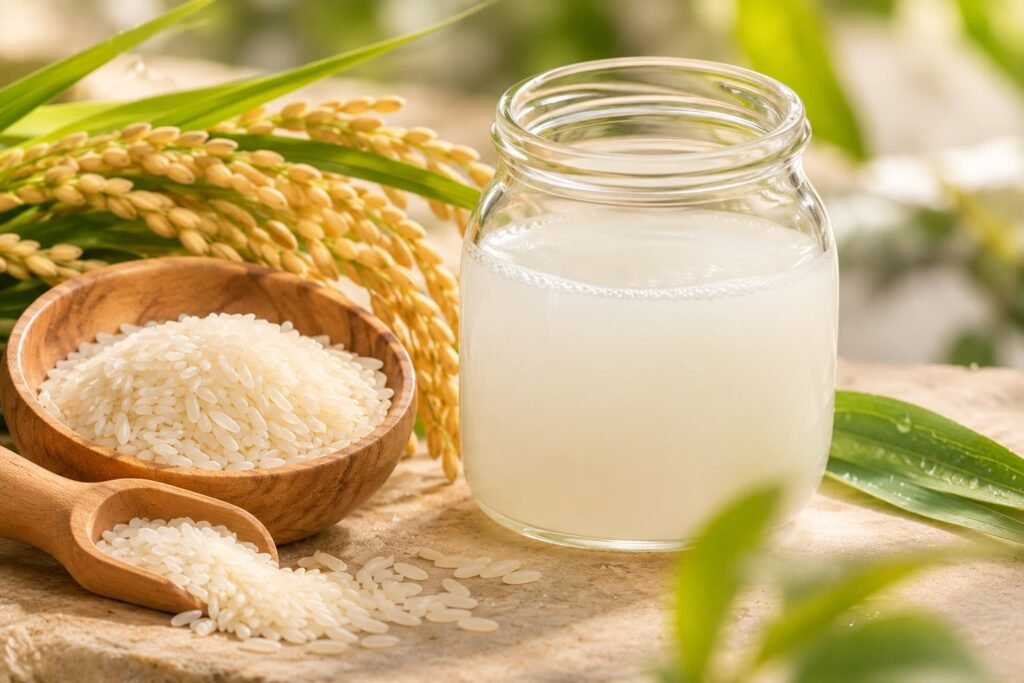
Rice Water
Inositol – A compound studied for its potential role in supporting hair smoothness.
Starch Content – Helps provide a soft, smooth feel to skin.
Ferulic Acid – An antioxidant compound found in rice that helps protect against oxidative stress.
Amino Acids – Help condition and soften the skin.
Rice Bran Antioxidants – May help support skin protection against environmental stress
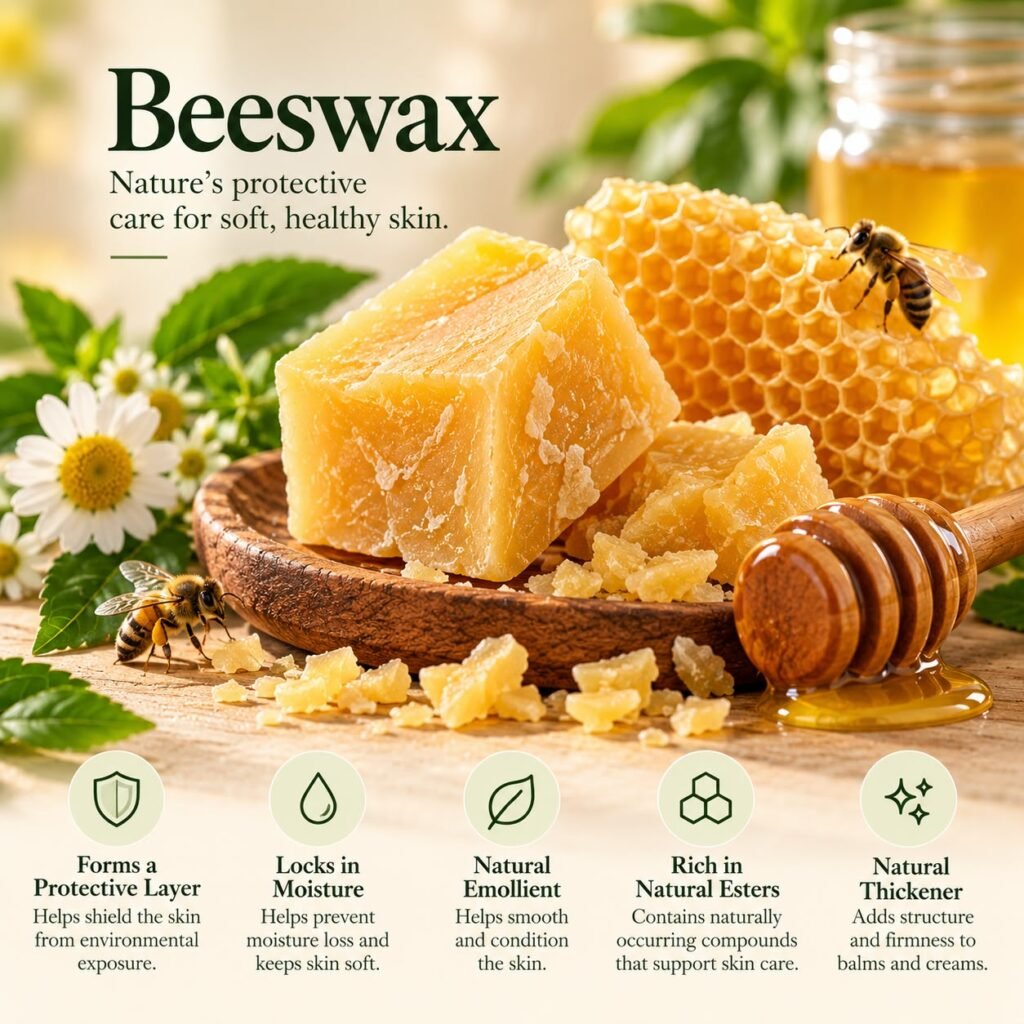
Beeswax
Natural Wax Esters – Give beeswax its distinctive protective and conditioning properties.
Moisture Lock – Forms a barrier that helps reduce water loss from the skin.
Skin Protection – Helps shield the skin’s surface from environmental exposure.
Rich Lipid Composition – Contains long-chain fatty acid esters that support its emollient qualities.
Natural Thickener – Adds structure and firmness to lip balms, creams, and body butters.
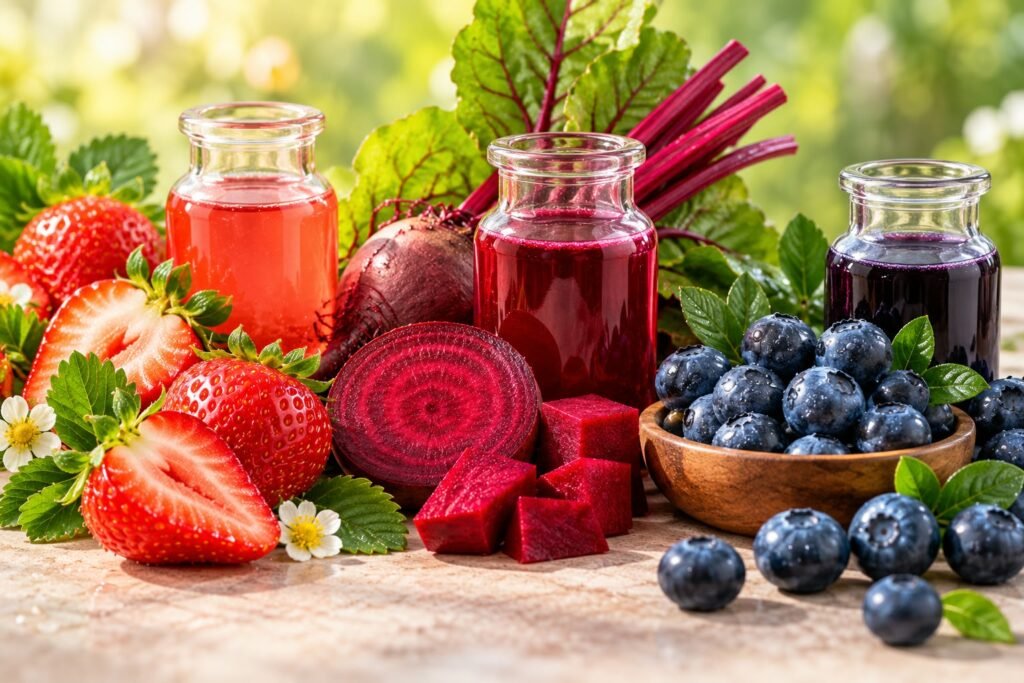
Strawberry, Beetroot & Blueberry Extracts
Strawberry – Vitamin C: Supports antioxidant care and a brighter-looking complexion.
Beetroot – Betalains: Provides natural red pigments with antioxidant properties.
Blueberry – Anthocyanins: Rich in antioxidant pigments that help protect against oxidative stress.
Natural Plant Pigments: Contribute vibrant red, pink, and purple hues to cosmetic formulations.
Botanical Skin Conditioning: Helps support soft, smooth, healthy-looking skin when used in suitable formulations.
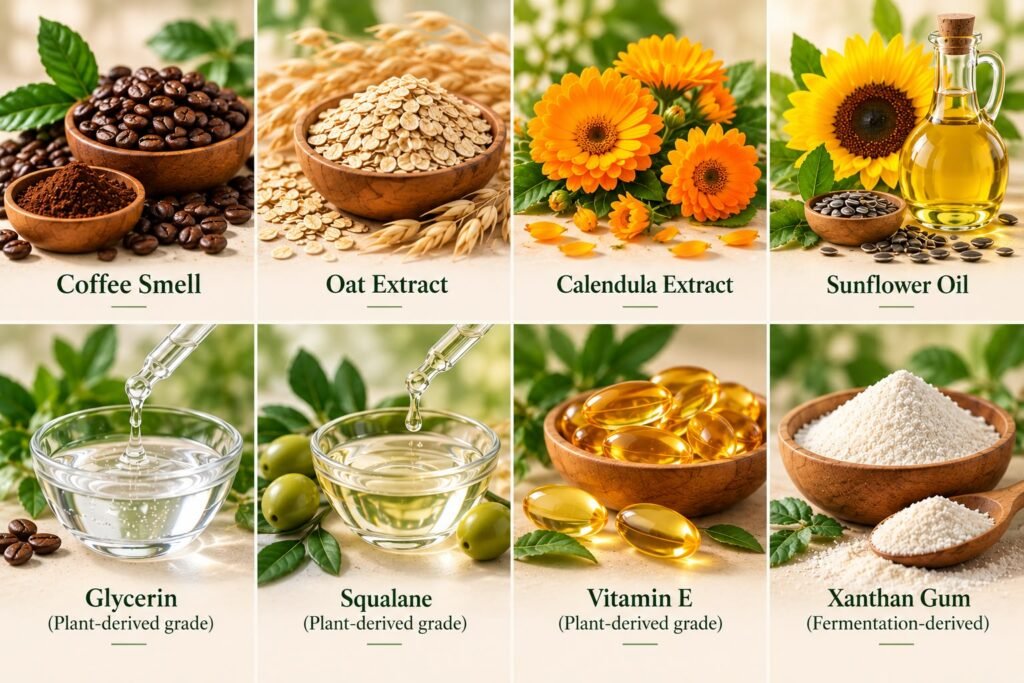
Nature’s Gentle Touch – From oats to calendula, nature offers ingredients that help soothe and care for delicate skin.
Moisture from Nature – Sunflower oil, plant-derived glycerin, and squalane help nourish skin and lock in moisture.
The Power of Plants – Botanical extracts contain naturally occurring compounds that provide antioxidant and skin-conditioning benefits.
Simple Ingredients, Meaningful Care – We use nature-derived ingredients to create thoughtful skincare that supports softness, smoothness, and hydration.
Inspired by Nature, Made with Care – We believe nature offers so much of what our skin needs. Our goal is to turn its goodness into products made with care for your family.
Natural Skincare Ingredients: Science, Functions, Formulation and Quality
Understanding the Science Behind Nature-Inspired Skincare
At Little Harvest, we believe that understanding an ingredient is just as important as choosing it. Natural skincare is not simply about using plant extracts or botanical oils. It is about understanding what an ingredient contains, how it interacts with the skin, how it behaves in a finished cosmetic formula, and how its quality affects the final product.
Nature provides a remarkable range of ingredients, including plant oils, botanical extracts, plant-derived moisturisers, natural waxes and fermentation-derived materials. Each ingredient has its own composition and functional properties.
However, the benefits of an ingredient depend on several factors, including its source, extraction method, concentration, purity, stability and compatibility with the other ingredients in a formulation.
This guide explores the science behind commonly used natural and nature-derived skincare ingredients, their cosmetic functions, formulation considerations and the importance of quality testing.
1. Aloe Vera: A Botanical Ingredient for Skin Conditioning
What does aloe vera contain?
Aloe vera (Aloe barbadensis) is a succulent plant whose inner leaf gel contains a high proportion of water along with polysaccharides, including acemannan, and smaller amounts of other naturally occurring compounds. Its composition varies depending on the plant variety, growing conditions, processing method and the part of the leaf used.
What is its function in skincare?
Aloe vera is commonly used as a skin-conditioning and moisturising ingredient. Its water-rich gel can contribute to a fresh skin feel, while its polysaccharides can influence the texture and film-forming properties of a cosmetic product.
How does it work in a finished formula?
In a lotion, cream, cleanser or gel, aloe vera may contribute to the product’s water phase and sensory characteristics. Its effect depends on whether the manufacturer uses fresh juice, concentrated juice, reconstituted powder or a standardised extract.
Aloe vera does not replace a complete moisturising system. Oils, emollients and humectants may also be needed to achieve the desired skin feel and hydration.
Extract type, source and quality
Cosmetic aloe vera ingredients may be supplied as liquid juice, concentrated juice, dried powder or other extract preparations. Important quality parameters include identity, solids content, microbiological quality, processing conditions and documentation of the source material.
The manufacturer should confirm the ingredient’s INCI name and whether the material contains added carriers or preservatives.
Scientific perspective
Aloe vera has been investigated for skin-conditioning and other biological properties. However, evidence for an isolated ingredient should not automatically be treated as proof that every aloe-containing cosmetic will produce the same results.
2. Oat Extract: A Source of Skin-Conditioning Compounds
What does oat extract contain?
Oats (Avena sativa) contain starches, beta-glucans, proteins, lipids and phenolic compounds. Colloidal oatmeal, oat oil and liquid oat extracts have different compositions because they are produced using different processing methods.
Avenanthramides are among the oat compounds investigated for their antioxidant and skin-soothing properties.
What is its function in skincare?
Oat-derived ingredients are used in moisturisers, cleansers and other products intended to support skin hydration, softness and comfort. Colloidal oatmeal is especially well studied for its moisturising and skin-barrier-supporting properties.
How does it work in a finished formula?
Depending on the material, oat ingredients may help bind water, form a protective film, condition the skin or improve the sensory properties of a formulation. Their performance depends on particle size, extraction method, concentration and compatibility with the rest of the formula.
Extract type, source and quality
Common materials include colloidal oatmeal, oat kernel extract, oat protein and oat oil. These are not interchangeable. The supplier should provide the exact ingredient identity, composition, recommended use level and microbial specifications.
Scientific evidence
Research published in the Journal of Drugs in Dermatology in 2016 examined colloidal oatmeal and reported improvements in skin dryness, moisturisation and barrier function in a clinical study involving 50 women with dry skin. The findings support the use of appropriately formulated colloidal oatmeal products, but they do not prove that every oat extract has identical effects.
Reference: https://pubmed.ncbi.nlm.nih.gov/27272074/
3. Calendula Extract: A Botanical Skin-Conditioning Ingredient
What does calendula contain?
Calendula officinalis, commonly known as calendula or pot marigold, contains a range of botanical compounds. Depending on the plant part and extraction process, these may include flavonoids, carotenoids, triterpenoids and other plant constituents.
The amount of each compound varies between extracts.
What is its function in skincare?
Calendula extract is commonly used in skin-conditioning products intended for dry or delicate skin. It is valued for its botanical composition and its potential soothing properties.
How does it work in a finished formula?
Calendula may be incorporated into water-based extracts, glycerin-based extracts or oil-based preparations. Its behaviour depends on the extraction solvent and the other ingredients in the formulation.
A water-soluble calendula extract may be suitable for the water phase, while an oil infusion may be more appropriate for oil-based formulations.
Extract type, source and quality
The manufacturer should specify the botanical name, plant part, extraction solvent, extract ratio and any carrier ingredients. Standardisation data can help establish consistency between batches.
Scientific perspective
Laboratory and preclinical research has investigated several calendula compounds for biological activity. However, evidence for a particular extract should not be used to claim that a finished cosmetic treats wounds, eczema or other medical conditions without appropriate supporting evidence and regulatory review.
4. Chamomile Extract: Botanical Skin Conditioning
What does chamomile contain?
Chamomile extracts may contain flavonoids and other botanical compounds. Depending on the species and preparation, constituents can include apigenin-related compounds and, in some preparations, other characteristic plant chemicals.
German chamomile and Roman chamomile differ in composition, so the species should be identified correctly.
What is its function in skincare?
Chamomile extract is used in products intended to condition the skin and provide a gentle skincare experience. It is often included in formulations designed for skin that feels dry or uncomfortable.
How does it work in a finished formula?
The extract’s solubility, colour, odour and stability depend on its preparation. The formulator must ensure that it is compatible with the formula’s pH, preservative system and packaging.
Extract type, source and quality
Quality documentation should identify the botanical species, plant part, extraction solvent, concentration and relevant contaminant specifications.
Scientific perspective
Some chamomile constituents have been investigated for antioxidant and anti-inflammatory activity. Clinical benefits depend on the actual preparation and formulation, and chamomile can cause allergic reactions in some people, particularly those sensitive to related plants.
5. Goat Milk: A Milk-Derived Conditioning Ingredient
What does goat milk contain?
Goat milk contains water, milk proteins, fats, lactose and minerals. The exact composition depends on the animal, diet, processing conditions and ingredient preparation.
What is its function in skincare?
Goat milk may be used as a conditioning ingredient in soaps, cleansers and creams. Its proteins and lipids contribute to the composition of the ingredient, while its water content affects formulation requirements.
How does it work in a finished formula?
In soap, milk ingredients undergo the effects of the alkaline soap-making process. In lotions and cleansers, the ingredient must be compatible with the formulation’s pH, stability and preservation requirements.
Goat milk does not automatically make a product hypoallergenic or suitable for every baby’s skin.
Extract type, source and quality
The manufacturer should identify whether the material is fresh milk, milk powder, a milk extract or another processed derivative. Relevant quality considerations include microbial control, storage stability and the potential presence of milk proteins.
Scientific perspective
Milk-derived ingredients can contribute to product conditioning, but claims about treating skin conditions or preventing allergies require specific evidence.
6. Coconut Oil: A Lipid-Based Emollient
What does coconut oil contain?
Coconut oil contains triglycerides made up of fatty acids, with lauric acid being a major component. It also contains smaller quantities of other fatty acids, depending on its source and processing.
What is its function in skincare?
Coconut oil is used as an emollient. It helps soften the skin, improve the feel of dry areas and reduce moisture loss by forming a lipid layer on the skin’s surface.
How does it work in a finished formula?
Coconut oil can be incorporated into oil-based balms, emulsified creams and soap formulations. Its proportion affects spreadability, richness, firmness and the overall sensory profile.
In soap, coconut oil contributes to the fatty-acid composition and cleansing properties of the finished soap.
Extract type, source and quality
Virgin coconut oil and refined coconut oil differ in processing, aroma and minor constituents. Quality assessment may include fatty-acid composition, oxidation indicators, purity and supplier traceability.
Scientific perspective
Coconut oil has been investigated for its emollient properties. Its suitability depends on the formulation and individual skin tolerance; it may not suit every face or every skin type.
7. Olive Oil: A Fatty-Acid-Rich Emollient
What does olive oil contain?
Olive oil contains triglycerides rich in oleic acid, together with smaller amounts of other fatty acids and minor constituents. Depending on grade and processing, these may include tocopherols, squalene and phenolic compounds.
What is its function in skincare?
Olive oil is used to soften the skin, improve spreadability and help reduce moisture loss.
How does it work in a finished formula?
It can be incorporated into creams, balms and soaps. Its fatty-acid profile affects the feel, stability and performance of the final product.
The percentage of olive oil and the other oils used can change the texture and behaviour of a formulation.
Extract type, source and quality
The manufacturer should specify the grade, refining status, fatty-acid profile and oxidation quality. Light, heat and oxygen can affect oil stability during storage.
Scientific perspective
Olive oil is a useful cosmetic emollient, but its suitability depends on the product type and the user’s skin. Its presence alone does not guarantee improved skin-barrier function in every formulation.
8. Shea Butter: A Rich Plant-Based Emollient
What does shea butter contain?
Shea butter is obtained from the kernels of the shea tree. It contains triglycerides rich in oleic and stearic acids, along with an unsaponifiable fraction containing various naturally occurring compounds.
The composition varies by source and processing.
What is its function in skincare?
Shea butter is used to soften the skin, add richness to creams and balms, and help reduce moisture loss.
How does it work in a finished formula?
Its semi-solid texture contributes body and richness to an oil phase. In an emulsion, it can help create a more substantial cream texture. In a balm, it contributes to firmness and spreadability.
Its performance depends on the proportions of other oils, waxes and emulsifiers.
Extract type, source and quality
Shea butter may be unrefined or refined. The manufacturer should provide the grade, processing details, quality specifications and oxidation information.
Scientific perspective
Shea butter is primarily an emollient ingredient. Claims that it removes scars, reverses ageing or treats medical skin conditions should not be made without appropriate evidence.
9. Sunflower Oil: A Source of Skin-Conditioning Lipids
What does sunflower oil contain?
Sunflower oil contains triglycerides, with fatty-acid composition depending on the variety. Conventional sunflower oil is often rich in linoleic acid, while high-oleic varieties contain more oleic acid.
What is its function in skincare?
It is used to soften skin and support the lipid layer that helps maintain hydration.
How does it work in a finished formula?
Sunflower oil contributes to the oil phase of creams, lotions and balms. Its fatty-acid profile influences spreadability, skin feel and oxidative stability.
Extract type, source and quality
The formulator should establish whether the oil is conventional or high-oleic, refined or unrefined, and obtain relevant fatty-acid and oxidation specifications.
Scientific perspective
Sunflower oil has been investigated for its role in skin conditioning. The effects of a finished product depend on its complete formulation, rather than the presence of the oil alone.
10. Beeswax: A Natural Structuring and Protective Ingredient
What does beeswax contain?
Beeswax is a complex wax made up largely of esters, hydrocarbons, free fatty acids and other wax components. Its exact composition depends on the source and purification process.
What is its function in skincare?
Beeswax acts as a thickener and structuring agent. It helps give balms and ointments their solid or semi-solid consistency and contributes to a protective layer on the skin.
How does it work in a finished formula?
When heated with oils, beeswax melts and mixes into the oil phase. As the formula cools, the wax solidifies and contributes to the product’s final texture.
Too much wax can make a product stiff or difficult to spread, while too little may leave a balm too soft.
Extract type, source and quality
The manufacturer should identify whether the wax is cosmetic grade, purified and appropriately tested for contaminants. Supplier documentation should confirm its identity and quality.
Scientific perspective
Beeswax is useful for texture, film formation and reducing moisture loss. It is not a substitute for an effective preservative in water-containing products.
11. Glycerin: A Humectant That Helps Retain Water
What does glycerin do?
Glycerin, also called glycerol, is a small, water-soluble molecule that attracts and retains water. Cosmetic-grade glycerin can be obtained from vegetable oils or manufactured through other industrial processes.
What is its function in skincare?
Glycerin is a humectant. It helps improve skin hydration and can reduce the dry feel associated with insufficient moisture.
How does it work in a finished formula?
Glycerin is commonly added to the water phase of creams, lotions, cleansers and gels. Its concentration affects hydration, viscosity and sensory properties.
The correct amount depends on the product type and the combination of humectants, emollients and other ingredients.
Extract type, source and quality
The supplier should provide the ingredient’s INCI identity, purity, origin and applicable quality documentation. If a product is described as plant-derived, that origin should be verified.
Scientific perspective
Glycerin is a well-established cosmetic humectant. Its performance is influenced by the complete formula and the conditions under which the product is used.
12. Squalane: A Lightweight Emollient
What does squalane do?
Squalane is a stable saturated hydrocarbon commonly used as an emollient. Cosmetic squalane is often produced from plant-derived feedstocks, such as sugarcane or olive-derived material.
Squalane should not be confused with squalene, its unsaturated counterpart.
What is its function in skincare?
Squalane helps soften the skin and improve spreadability without necessarily creating the heavy feel associated with some richer oils.
How does it work in a finished formula?
It can be used in oil-based serums, creams, lotions and balms. It contributes to the emollient phase and influences the finished product’s slip and after-feel.
Source and quality
The supplier should confirm the source, purity, identity and oxidation or stability specifications. Plant-derived origin should be supported by documentation if it is used in marketing claims.
Scientific perspective
Squalane is primarily a skin-conditioning ingredient. Claims about repairing disease, eliminating wrinkles or treating acne require specific supporting evidence.
13. Vitamin E: An Antioxidant Ingredient
What does vitamin E contain?
Vitamin E refers to a family of compounds that includes tocopherols and tocotrienols. Cosmetic ingredients may contain tocopherol, tocopheryl acetate or a blend, depending on the supplier and formulation.
What is its function in skincare?
Vitamin E is used as an antioxidant and skin-conditioning ingredient. In oil-containing formulations, suitable forms may also help protect susceptible oils from oxidation.
How does it work in a finished formula?
The form of vitamin E matters. Tocopherol and tocopheryl acetate are not identical in their chemical behaviour. The formulator must consider solubility, concentration, stability and the formula’s other antioxidants.
Vitamin E does not replace a broad-spectrum preservative in a water-based product.
Source and quality
The manufacturer should identify the exact form, concentration, carrier and source. If a plant-derived grade is claimed, the source should be verified.
Scientific perspective
Vitamin E has recognised antioxidant properties, but the effect on skin depends on its form, concentration, delivery system and the finished product.
14. Panthenol: Pro-Vitamin B5
What is panthenol?
Panthenol is a derivative of pantothenic acid, commonly known as vitamin B5. Cosmetic panthenol is available in different stereochemical forms and is used in water-based formulations.
What is its function in skincare?
Panthenol is used as a humectant and skin-conditioning ingredient. It can help improve hydration and the feel of dry skin.
How does it work in a finished formula?
Panthenol is typically incorporated into the water phase, subject to the supplier’s processing recommendations. The formulator must consider pH, temperature, compatibility and the finished product’s stability.
Source and quality
The supplier should provide the exact ingredient identity, assay, purity, recommended use level and stability information.
Scientific perspective
Panthenol has been investigated for its moisturising and skin-conditioning properties. The results of a study on one concentration or product cannot automatically be applied to every formulation.
15. Xanthan Gum: A Fermentation-Derived Thickener
What does xanthan gum contain?
Xanthan gum is a polysaccharide produced by microbial fermentation. Its molecular structure gives it thickening and rheological properties in aqueous systems.
What is its function in skincare?
It is used to increase viscosity, improve suspension and help stabilise the texture of gels, lotions and cleansers.
How does it work in a finished formula?
Xanthan gum is generally dispersed into the formula using an appropriate manufacturing method to reduce clumping. Its hydration and viscosity depend on the grade, concentration, salts, pH and other ingredients.
It may be used with an emulsifier or others
Skin Types and Product Selection: A Complete Guide to Choosing the Right Skincare
Introduction: Understand Your Skin Before Choosing a Product
Healthy skincare begins with understanding your skin’s individual needs. A product that feels comfortable on one person’s skin may leave another person’s skin feeling tight, greasy or irritated.
Your skin’s needs can depend on natural oil production, moisture levels, the condition of the skin barrier, age, climate, lifestyle and sensitivity to particular ingredients.
At Little Harvest, we believe that choosing skincare should be simple, informed and thoughtful. Nature offers many valuable ingredients, but selecting the right combination and creating a well-tested finished product are equally important.
This guide explains four common skin types—dry, oily, combination and sensitive—and how to select suitable cleansers, soaps, moisturisers and body lotions.
1. Dry Skin: Nourishment and Moisture Retention
What is dry skin?
Dry skin generally lacks sufficient natural oils and may struggle to retain moisture. It can feel tight after washing and may look rough, flaky or dull. Some people experience itching, particularly in dry weather or after using harsh cleansing products.
Dry skin is not always the same as dehydrated skin. Dry skin describes a tendency towards reduced oil, while dehydration refers to a lack of water in the outer skin layer. Both can occur together.
Common signs of dry skin
– Tightness after bathing or washing.
– Rough, flaky or visibly peeling areas.
– A dull or uneven-looking surface.
– Fine lines that appear more noticeable when the skin is dry.
– Itching or discomfort after exposure to harsh cleansers.
Which cleanser is suitable for dry skin?
Choose a mild, non-stripping cleanser that removes dirt, sweat and excess product without leaving the skin feeling tight.
Look for:
– Gentle cleansing agents.
– Glycerin and other humectants where appropriate.
– Creamy or moisturising cleanser textures.
– Fragrance-free options if your skin is easily irritated.
Avoid frequent washing with harsh soaps, very hot water and aggressive scrubbing.
Which soap is suitable for dry skin?
A mild syndet cleansing bar or gentle, moisturising wash may be more suitable than traditional high-pH soap. A product marketed as a moisturising soap is not automatically gentle, so consider its complete formulation and how your skin feels after use.
If your skin is very dry, itchy or affected by eczema, a soap substitute recommended by a healthcare professional may be more appropriate than ordinary soap.
Which moisturiser is suitable for dry skin?
Dry skin usually benefits from a cream or balm with a combination of water-binding ingredients, emollients and ingredients that help reduce water loss.
Ingredients commonly used in moisturisers include:
– Glycerin: helps attract and retain water in the outer skin layer.
– Shea butter: provides emollient properties and helps soften rough skin.
– Squalane: an emollient that helps improve skin softness.
– Sunflower seed oil: supplies fatty acids and can help support the skin’s surface barrier.
– Petrolatum or other occlusive ingredients: help reduce moisture loss when included in a suitable formula.
Apply moisturiser after bathing while the skin is still slightly damp.
Which body lotion is suitable for dry skin?
For mild dryness, a nourishing lotion may be sufficient. For persistent or more pronounced dryness, a richer cream or balm may provide longer-lasting comfort.
Choose according to the severity of dryness, the body area and your personal comfort rather than relying on the product name alone.
2. Oily Skin: Gentle Cleansing and Lightweight Hydration
What is oily skin?
Oily skin produces more sebum, the skin’s natural oil. It often appears shiny, especially across the forehead, nose and chin. Some people with oily skin also experience blackheads, clogged pores or acne.
Oily skin still needs moisture. Stripping away too much oil can irritate the skin and make a routine difficult to tolerate.
Common signs of oily skin
– Persistent shine or a greasy feeling.
– Enlarged-looking pores.
– Frequent blackheads or clogged pores.
– Makeup or sunscreen slipping more easily.
– An oily appearance later in the day.
Which cleanser is suitable for oily skin?
Choose a gentle, water-rinsable cleanser that removes excess oil and everyday impurities without leaving the skin tight or uncomfortable.
Look for:
– Mild cleansing agents.
– A lightweight, easy-to-rinse formula.
– Fragrance-free options if sensitivity is a concern.
– Ingredients such as glycerin that help maintain comfort during cleansing.
If you have acne, a targeted product containing a proven acne-care ingredient may help, but it should be selected according to your skin’s tolerance and the severity of your concern. Persistent or painful acne warrants advice from a dermatologist.
Which soap is suitable for oily skin?
A gentle cleansing bar or body wash can remove sweat and excess surface oil. Avoid repeatedly washing your face with strong soap or scrubbing to eliminate every trace of oil.
A clean-feeling finish should not mean a tight, burning or excessively dry feeling.
Which moisturiser is suitable for oily skin?
A lightweight gel, gel-cream or fluid lotion may be more comfortable than a rich balm.
Consider formulas containing:
– Glycerin for hydration.
– Squalane for lightweight emollience.
– Panthenol for skin-conditioning benefits.
– Ingredients labelled non-comedogenic when that property has been appropriately assessed.
Non-comedogenic means a product is formulated or assessed to be less likely to block pores; it does not guarantee that every individual will tolerate it.
Which body lotion is suitable for oily skin?
Choose a lightweight lotion that spreads easily and absorbs comfortably. There is no need to avoid moisturising the body simply because the skin is oily.
For areas prone to body acne, choose products suited to those areas and avoid unnecessarily heavy or greasy layers if they worsen your symptoms.
3. Combination Skin: Balance Different Areas of the Face
What is combination skin?
Combination skin has more than one skin characteristic at the same time. A common pattern is an oily T-zone—the forehead, nose and chin—with normal or dry cheeks.
The goal is not to force every part of the face to feel identical. Instead, use products that keep the skin comfortable without over-cleansing or over-moisturising particular areas.
Common signs of combination skin
– Shine on the forehead, nose or chin.
– Dryness or tightness on the cheeks.
– Pores that look more noticeable in the T-zone.
– Different reactions to the same product across the face.
– Seasonal changes in oiliness and dryness.
Which cleanser is suitable for combination skin?
A gentle, balanced cleanser is usually a practical starting point. It should remove surface oil without worsening dryness on the cheeks.
Avoid using a strong cleanser across the entire face simply because one area is oily.
Which soap is suitable for combination skin?
For facial cleansing, a gentle syndet cleanser is generally preferable to a traditional alkaline soap, especially if some areas are dry or sensitive.
A separate body cleanser may be selected according to the needs of the body skin.
Which moisturiser is suitable for combination skin?
A lightweight lotion or gel-cream may work well across much of the face. Apply a little more moisturiser to dry areas and less to areas that become greasy, adjusting as needed.
Useful ingredient categories include:
– Humectants such as glycerin.
– Emollients such as squalane.
– Barrier-supporting ingredients such as ceramides, where included.
Combination skin does not necessarily require two separate moisturisers. Start with one well-tolerated product and adjust application by area.
Which body lotion is suitable for combination skin?
Choose a lotion according to the body area’s needs. For example, arms and legs may need more moisturising than the chest or back. If a particular area becomes irritated or develops persistent spots, reassess the product and seek professional advice if necessary.
4. Sensitive Skin: Prioritise Comfort and Tolerability
What is sensitive skin?
Sensitive skin describes skin that reacts easily to products, environmental conditions or friction. Reactions may include stinging, burning, redness, itching or uncomfortable tightness.
Sensitivity is not a single diagnosis. Similar symptoms can occur with irritant contact dermatitis, allergic contact dermatitis, eczema and other skin conditions.
Common signs of sensitive skin
– Stinging or burning after applying skincare.
– Redness following washing or product use.
– Itching or discomfort after fragrance exposure.
– Reactions to multiple products.
– A tendency to become irritated by scrubbing, hot water or frequent exfoliation.
Which cleanser is suitable for sensitive skin?
Choose a simple, gentle cleanser, preferably fragrance-free, with a formulation designed to minimise irritation.
Look for:
– Mild cleansing agents.
– A formula that rinses off easily.
– No unnecessary fragrance or essential oils if these trigger symptoms.
– Minimal friction during application.
“Fragrance-free” is not the same as “hypoallergenic,” and neither term guarantees that a product cannot cause a reaction.
Which soap is suitable for sensitive skin?
A gentle syndet bar or fragrance-free liquid cleanser is often a better starting point than a strongly alkaline traditional soap.
If you have eczema or recurring irritation, consider a healthcare professional’s advice about soap substitutes and moisturising treatments. Do not assume that a product containing herbs or essential oils will automatically be gentler.
Which moisturiser is suitable for sensitive skin?
A simple, fragrance-free cream or lotion may be a sensible starting point. For dry or eczema-prone skin, richer emollient formulations may be useful.
Consider:
– Glycerin for hydration.
– Petrolatum or suitable emollients to reduce water loss.
– Panthenol as a skin-conditioning ingredient.
– Ceramides where appropriate for barrier support.
Introduce one new product at a time. Test it on a small area according to the product’s directions before wider use. A small-area test cannot rule out every allergic reaction.
Which body lotion is suitable for sensitive skin?
Choose a fragrance-free formula with a short, clearly declared ingredient list where practical. Avoid ingredients that have previously caused a reaction.
If you have persistent redness, swelling, severe itching, broken skin or repeated reactions, stop using the suspected product and seek medical advice. A dermatologist may recommend patch testing when an allergy is suspected.
5. How to Choose the Right Skincare Product
Choosing a cleanser
A cleanser should remove everyday impurities while leaving the skin comfortable.
– Dry skin: consider a creamy or moisturising cleanser.
– Oily skin: consider a gentle gel or foaming cleanser that does not strip the skin.
– Combination skin: choose a balanced cleanser that does not worsen dry areas.
– Sensitive skin: choose a simple, fragrance-free cleanser.
A cleanser does not need to produce a large amount of foam to clean effectively. Strong foaming is not proof of better cleansing.
Choosing a soap or cleansing bar
Understand the difference between traditional soap and a syndet cleansing bar. Traditional soap is generally alkaline, whereas syndet products use synthetic detergent ingredients and can be formulated closer to the skin’s natural pH.
A product’s actual pH and cleansing performance depend on the finished formulation. Do not judge a cleansing bar by marketing terms such as “natural,” “herbal” or “moisturising” alone.
For dry, sensitive or eczema-prone skin, consider fragrance-free gentle cleansers or clinician-recommended soap substitutes.
Choosing a moisturiser
Moisturisers work through different combinations of three ingredient functions:
Humectants: attract and hold water in the outer skin layer. Examples include glycerin and hyaluronic acid.
Emollients: soften the skin and improve the feel of rough areas. Examples include squalane, shea butter and certain plant oils.
Occlusives: form a protective layer that reduces water loss. Petrolatum is a well-known example.
Many effective moisturisers combine all three functions. Choose the texture according to dryness, the area being treated and personal comfort.
Choosing a body lotion
Body lotions are generally lighter and easier to spread than creams or ointments. They may suit normal skin or mild dryness, while richer creams can be useful for more pronounced dryness.
Look at:
– How dry the skin is.
– Whether the product is comfortable in your climate.
– Whether it contains fragrance or known triggers.
– Whether it spreads and absorbs as you prefer.
– Whether the product’s claims are supported by appropriate testing.
Apply after bathing when the skin is slightly damp, and reapply when needed.
6. A Simple Daily Skincare Routine
Morning
1. Cleanse gently, or rinse with water if cleansing is not needed and your skin tolerates this.
2. Apply a moisturiser suited to your skin type.
3. Apply broad-spectrum sunscreen labelled SPF 30 or higher to exposed skin. Follow the directions and reapply as indicated, particularly after swimming, sweating or towel-drying.
Evening
1. Remove sunscreen, makeup and daily impurities with a suitable cleanser.
2. Apply moisturiser.
3. Use targeted treatments only when needed and when suitable for your skin.
A routine does not need many products to be effective. Consistency and tolerability are more important than the number of steps.
7. Natural Ingredients and Skin Types
Natural-origin ingredients can contribute useful properties to skincare, but suitability depends on the finished formula, concentration, processing, stability and individual tolerance.
Glycerin: A humectant that helps attract water to the outer skin layer. It can be useful in moisturisers for several skin types.
Shea butter: An emollient that helps soften the skin. It may be useful in richer products for dry skin.
Sunflower seed oil: Provides fatty acids and emollient properties. Its suitability depends on the formulation and the individual’s tolerance.
Squalane: An emollient used to improve skin softness and provide a lightweight feel.
Aloe vera: Used in some products for skin-conditioning purposes. The benefits depend on the specific material and finished formula; it should not be treated as a cure for skin disease.
Oat extract or colloidal oatmeal: Certain oat preparations have evidence supporting moisturising and skin-soothing benefits. The type of oat ingredient and its quality matter.
Calendula and chamomile extracts: Used in some skincare formulations for skin-conditioning purposes. Botanical ingredients can still cause irritation or allergy in some individuals.
No single ingredient is suitable for everyone. Even natural oils and plant extracts may trigger reactions, and a finished product must be evaluated as a whole.
8. Common Skincare Mistakes to Avoid
– Using harsh soap because the skin feels oily.
– Skipping moisturiser solely because the skin is oily.
– Applying many new products at once.
– Assuming “natural” means allergy-free.
– Scrubbing flaky or irritated skin.
– Using very hot water or washing too frequently.
– Assuming a product’s pH alone proves that it is gentle.
– Treating eczema, severe acne or persistent rashes with cosmetic products alone.
– Assuming “hypoallergenic” or “non-comedogenic” guarantees a reaction-free result.
9. When Should You Consult a Dermatologist?
Seek professional advice if you have persistent redness, severe itching, swelling, painful or cystic acne, cracked or bleeding skin, suspected infection, recurring reactions or symptoms that do not improve after stopping an irritating product.
A cosmetic cleanser or moisturiser may support everyday skincare, but it is not a substitute for diagnosis or medical treatment.
10. Little Harvest’s Approach to Skin-Type-Based Skincare
At Little Harvest, our philosophy is to make skincare selection clearer and more responsible. We believe customers deserve understandable ingredient information, suitable product guidance and honest communication about what a product can and cannot do.
We value ingredients inspired by nature, careful formulation, quality control and appropriate safety assessment. Rather than claiming that one product suits everyone, our aim is to help customers make informed choices according to their skin’s needs.
Little Harvest
Healthy skincare begins with understanding your skin, choosing products thoughtfully and using them consistently.
Safety and Transparency in Skincare: A Complete Guide to Patch Testing, Fragrance, Preservatives, pH and Product Testing
Introduction: Safety Comes Before Beauty
At Little Harvest, we believe that skincare should be guided by care, honesty and scientific responsibility. Every product applied to the skin should be developed with attention to its ingredients, manufacturing quality, stability and intended use.
This is particularly important for babies and young children, whose skin may be more vulnerable to irritation and whose products may be used frequently over large areas of the body.
Natural ingredients can offer valuable skincare properties, but natural origin alone does not guarantee safety. Plant extracts can contain allergens, oils can vary in quality, and water-based products can support microbial growth if they are not adequately protected.
Responsible skincare therefore requires more than a good ingredient list. It requires appropriate formulation, manufacturing controls, testing, clear labelling and honest communication.
This guide explains the key safety considerations for skincare products, including baby soaps, shampoos, body washes, lotions and other personal-care products.
1. What Is Patch Testing?
Patch testing is a method used to investigate whether a substance causes a skin reaction. However, the term is used for two different activities: a consumer’s small-area product test and medical patch testing performed to investigate allergic contact dermatitis.
These are not equivalent.
Consumer small-area product testing
Before using a new cosmetic, an adult consumer may test it on a small area of intact skin according to the product manufacturer’s instructions.
A cautious approach is to:
– Choose a small area of skin that is not already irritated.
– Apply the product as directed, without covering it or leaving it on longer than instructed.
– Observe the area for redness, itching, swelling, burning or a rash.
– Stop using the product if a reaction develops.
For leave-on products, repeated small-area application over several days may reveal some reactions, but it does not guarantee that the product will be safe over the entire body or with long-term use.
Rinse-off products should be tested according to their directions; do not leave a shampoo or cleanser on the skin as though it were a leave-on product.
A small-area consumer test cannot reliably rule out delayed allergy, irritation from repeated use or reactions around the eyes and mouth.
Medical patch testing
Medical patch testing is performed by a qualified healthcare professional when allergic contact dermatitis is suspected. Carefully selected allergens are applied under controlled conditions and assessed at scheduled intervals.
It may help identify substances responsible for a person’s allergic skin reaction.
Medical patch testing is not the same as applying a cosmetic to the arm at home. It should not be attempted using raw ingredients, concentrated fragrance oils or preservatives.
Special precautions for babies
Do not use an adult home-testing routine as proof that a product is safe for a baby.
For baby products:
– Use products specifically developed and appropriately assessed for the intended age group.
– Follow the product label and healthcare professional’s advice.
– Avoid testing products on broken, inflamed or eczematous skin.
– Do not deliberately expose a baby to a suspected allergen.
– Stop use if irritation occurs and seek medical advice when symptoms are significant or persistent.
A product that has passed a safety assessment may still cause an individual reaction. Conversely, a small-area test with no reaction does not prove universal safety.
2. Fragrance Sensitivity: Why Fragrance-Free Can Be a Useful Choice
What is fragrance?
Fragrance is used to give products a pleasant smell or to mask the natural odour of ingredients. It may consist of a mixture of aromatic substances.
Fragrance can come from synthetic materials, essential oils, aromatic plant extracts or other fragrance ingredients. Natural fragrance is not automatically less allergenic than synthetic fragrance.
How can fragrance affect the skin?
Some fragrance ingredients can cause allergic contact dermatitis in susceptible individuals. Others may irritate the skin, particularly at unsuitable concentrations or when used on an already damaged skin barrier.
Possible signs include:
– Redness.
– Itching.
– Burning or stinging.
– A rash, dryness or scaling.
– Swelling in more significant reactions.
Symptoms may appear immediately or develop after repeated exposure. A new reaction can occur even if a product was previously tolerated.
Fragrance-free versus unscented
Fragrance-free generally indicates that fragrance has not been added for the purpose of scent, although the complete ingredient declaration should still be checked.
Unscented products may contain ingredients intended to mask the smell of the formulation. Therefore, unscented and fragrance-free do not necessarily mean the same thing.
For products intended for babies or people with sensitive skin, a fragrance-free formula is often a sensible starting point.
Are essential oils suitable for baby skincare?
Essential oils are concentrated aromatic materials. Some can irritate the skin or cause allergic reactions, and suitability depends on the particular oil, concentration, route of exposure and age of the intended user.
Do not assume that lavender, citrus, peppermint, eucalyptus or other essential oils are automatically safe because they are plant-derived.
For baby shampoos, body washes and lotions, Little Harvest should consider avoiding added fragrance and essential oils unless their inclusion is specifically justified by a qualified formulator’s safety assessment for the intended age group and use.
Transparency about fragrance
Brands should accurately disclose fragrance-related ingredients in accordance with applicable labelling requirements. Avoid describing a product as fragrance-free if the formula contains added fragrance.
A mild-smelling product is not necessarily fragrance-free, and fragrance-free does not mean that allergic reactions are impossible.
3. Preservatives: Why They Are Important in Skincare
What are preservatives?
Preservatives are ingredients used to help prevent or control the growth of microorganisms in products that could otherwise become contaminated during manufacturing, storage or use.
Water-based products such as shampoos, body washes and lotions can be especially vulnerable to microbial growth. Contamination can occur through raw materials, manufacturing equipment, filling processes, packaging or repeated consumer use.
Why do baby products need preservation?
Baby products are not exempt from the need for effective microbial protection.
Products containing water, botanical extracts or other water-based materials may support microbial growth unless the formulation and manufacturing system adequately control it.
A contaminated product can cause harm even when it smells normal, looks unchanged and contains ingredients marketed as natural.
Preservation is therefore a safety measure, not simply a way to extend shelf life.
Are preservatives harmful?
Preservatives are not all the same. Their safety depends on the substance, concentration, permitted use, exposure and the person’s sensitivity.
Some preservatives can cause irritation or allergy in susceptible people. However, excluding all preservatives from a water-based product does not automatically make that product safer.
The correct approach is to select an appropriate preservative system that complies with applicable regulations and has been shown to work in the finished formulation.
Common preservative considerations
Preservative systems may include materials such as phenoxyethanol, certain organic acids and their salts, or other permitted preservative ingredients. Each has its own conditions of use and limitations.
A manufacturer should confirm:
– The exact preservative identity and grade.
– The permitted concentration and intended product category.
– Compatibility with the formula’s pH and other ingredients.
– Effectiveness against relevant microorganisms.
– Safety for the intended population and application area.
– Compliance with applicable Indian cosmetic requirements.
The presence of a preservative is not, by itself, evidence that a product is unsafe. Nor does a “preservative-free” claim prove that a product is safer.
Can vitamin E or essential oils replace a preservative?
Vitamin E is commonly used as an antioxidant to help protect oils from oxidation. It is not a broad-spectrum preservative for a water-based lotion or shampoo.
Essential oils should not be relied upon as a substitute for a properly designed and validated preservative system.
Products without conventional preservatives still require an appropriate risk assessment and effective contamination-control strategy. Some specialised products may use different validated approaches, but this must be demonstrated rather than assumed.
4. pH: Understanding Skin Compatibility
What is pH?
pH is a measure of how acidic or alkaline an aqueous solution is. The pH scale is commonly expressed from 0 to 14, with 7 being neutral under standard conditions.
The skin’s surface is generally mildly acidic, although its measured pH varies by body area, age, environment and measurement method.
A suitable pH can support product performance and skin compatibility, but pH alone cannot establish whether a product is safe or gentle.
Why does pH matter in skincare?
pH can affect:
– The compatibility of a formulation with the skin.
– The performance of surfactants and other ingredients.
– The activity of some preservatives.
– The stability of certain ingredients.
– The performance of thickeners and emulsifiers.
– The behaviour of the finished product during storage.
The appropriate pH range depends on the product type and its complete formula.
Is pH 5.5 always the best pH?
No. A pH of approximately 5.5 is often discussed in relation to the mildly acidic skin surface, but it is not a universal target for every skincare product.
Different products require different pH specifications. A soap, syndet cleansing bar, shampoo, lotion and anhydrous balm may have very different pH considerations.
Traditional soap is usually alkaline because of its chemistry. Syndet cleansers can be formulated at different pH values, including mildly acidic ranges.
For a water-based baby shampoo or body wash, the formulator should establish a suitable pH specification based on the ingredients, intended use, preservation requirements and safety assessment.
How should pH be tested?
The manufacturer should:
– Use a suitable calibrated pH meter or validated method.
– Follow a defined sample-preparation procedure where required.
– Test the finished product, not merely the raw ingredients.
– Establish an acceptable specification and record the results.
– Check pH again during stability testing.
For products that are not aqueous, pH may not be directly measurable in the same way as it is for water-based products. The appropriate method depends on the product.
Adding citric acid simply to reach pH 5.5 is not sufficient. It can affect formula stability and preservative performance, and the final product must be retested.
5. Stability Testing: Will the Product Remain Acceptable Over Time?
What is stability testing?
Stability testing evaluates whether a product retains its important physical, chemical and functional properties under defined storage conditions.
A product may appear acceptable when first manufactured but change during transport, storage or use. Stability testing helps the manufacturer understand these changes and establish a justified shelf life and suitable storage instructions.
What should be checked?
Depending on the product, stability assessments may include:
Appearance: Changes in colour, clarity, texture, separation or visible particles.
Odour: Unexpected changes in smell that may indicate ingredient degradation or another quality issue.
pH: Changes that may affect product performance, compatibility or preservation.
Viscosity and texture: Thickening, thinning, loss of flow or changes in spreadability.
Emulsion stability: Separation of oil and water phases, creaming or other signs of instability.
Packaging compatibility: Leakage, swelling, cracking, corrosion, product interaction with the container, or failure of pumps and closures.
Chemical stability: Degradation or changes in relevant ingredients, where appropriate.
Microbiological quality: Confirmation that the product continues to meet the applicable microbiological specifications during the defined shelf life, supported by an appropriate testing strategy.
Types of stability studies
Manufacturers may use several approaches, depending on the product and its risk profile.
– Real-time stability testing: evaluates the product under defined storage conditions over time.
– Accelerated stability testing: uses selected elevated or otherwise controlled conditions to help identify potential changes more quickly.
– Temperature cycling or other stress studies: may help investigate physical instability during temperature changes.
– Packaging compatibility studies: evaluate the interaction between the formulation and its intended packaging.
Accelerated testing can provide useful information, but it does not automatically replace real-time data. A specific shelf life should not be assigned solely because a product survived a short heat test.
Why is stability especially important for baby products?
Baby products may be used frequently and on delicate areas of skin. A formulation that separates, changes pH, loses viscosity or becomes microbiologically unsafe should not be released simply because it looked acceptable on the manufacturing date.
For Little Harvest, the finished formula, the actual packaging and the intended storage conditions should all be considered when establishing product shelf life.
6. Microbial Safety: Protecting Products From Contamination
What is microbial contamination?
Microbial contamination occurs when unwanted bacteria, yeasts or moulds enter or multiply in a product.
Potential sources include:
– Contaminated water or raw materials.
– Poorly cleaned manufacturing equipment.
– Inadequate manufacturing hygiene.
– Contaminated filling or packaging operations.
– Repeated contact with wet hands or fingers.
– Unsuitable packaging or storage conditions.
A contaminated product may not always show visible changes or an unpleasant smell. Appearance and smell alone cannot establish microbiological safety.
Which products need special attention?
Water-based products deserve particular attention, including:
– Baby shampoos.
– Baby body washes.
– Water-based lotions and creams.
– Aloe vera gels.
– Products containing botanical extracts or other water-based ingredients.
The precise risk depends on the formulation, manufacturing controls, packaging and use.
Anhydrous products, such as some oil- or wax-based balms, may present a different microbial risk, but they are not automatically free from contamination risks. Raw materials, water introduction during use and the product’s intended application must still be considered.
What microbiological tests should a manufacturer discuss?
Depending on the product and applicable specifications, the manufacturer should discuss:
1. Total aerobic microbial count or the applicable total viable count.
2. Yeast and mould count.
3. Testing for specified objectionable microorganisms or pathogens relevant to the product category.
4. Preservative efficacy testing, also called a preservative challenge test, where appropriate.
5. Risk-based microbiological monitoring of raw materials, water and the manufacturing environment.
The exact organisms, acceptance limits and methods should be selected according to applicable Indian requirements and recognised standards, such as the relevant parts of ISO 17516 and ISO 11930 where appropriate.
What is a preservative challenge test?
A preservative challenge test evaluates how effectively the preservation system controls selected microorganisms introduced into a test sample under a defined laboratory protocol.
The result helps establish whether the preservative system is effective for the tested formulation and conditions.
A challenge test is not the same as simply checking whether a finished product contains microorganisms on one day.
The test method and acceptance criteria must be appropriate for the product category. A manufacturer should not claim that a formula has passed a challenge test without a report supporting that claim.
How can consumers reduce contamination risks?
Consumers should:
– Follow the product’s storage and usage instructions.
– Keep containers closed when not in use.
– Avoid adding water to products.
– Avoid sharing products that come into direct contact with skin.
– Use clean, dry hands where appropriate.
– Discard products that show unexpected changes or are past their labelled expiry date.
– Follow any period-after-opening instructions provided.
These practices help reduce risk but do not replace appropriate manufacturing and laboratory controls.
7. Baby Skincare: Additional Precautions
Babies’ skin changes as they grow. Newborns, infants and older children may differ in skin maturity, exposure patterns and product-use needs. Products intended for one age group should not automatically be assumed suitable for another.
Choose products according to the intended age and use
The manufacturer should clearly define the intended age group, body area, frequency of use and whether the product is rinsed off or left on the skin.
Special care is warranted for products used:
– On the face or around the eyes.
– On the scalp.
– On the diaper area.
– On broken, inflamed or eczema-prone skin.
– Over large areas of the body.
– Frequently throughout the day.
A rinse-off product and a leave-on lotion have different exposure patterns and should be assessed accordingly.
Prefer simple, appropriately formulated products
For baby skincare, a reasonable formulation strategy is to:
– Use ingredients with appropriate safety data and traceable specifications.
– Avoid unnecessary fragrance and essential oils where practical.
– Select cleansing agents appropriate for the intended use.
– Use suitable moisturising ingredients without overloading the formula.
– Use a validated preservation strategy for products that need one.
– Minimise avoidable irritants and known allergens.
– Use suitable packaging and manufacturing hygiene.
– Verify the finished product’s safety and quality.
A short ingredient list may make a product easier to understand, but ingredient count alone does not determine safety.
Do natural extracts always suit babies?
No. Botanical extracts can vary in composition, and some may cause irritation or allergic reactions.
For example, chamomile and calendula are used in some skincare products, but plant-derived ingredients should still be assessed for their source, quality, impurities, concentration, compatibility and potential to cause reactions.
For a baby product, the manufacturer should have a clear reason for including each extract and evidence supporting its safe use in the intended formula.
What about baby soaps and shampoos?
The manufacturer should assess the complete finished formula rather than relying on claims such as “mild,” “herbal,” “chemical-free” or “tear-free.”
A “tear-free” claim requires appropriate substantiation and should never encourage deliberate exposure to a baby’s eyes. Follow the label and avoid direct eye contact unless the product is specifically intended for that use and the claim is supported.
If a baby develops persistent redness, swelling, blistering or a spreading rash, discontinue the suspected product and seek medical advice.